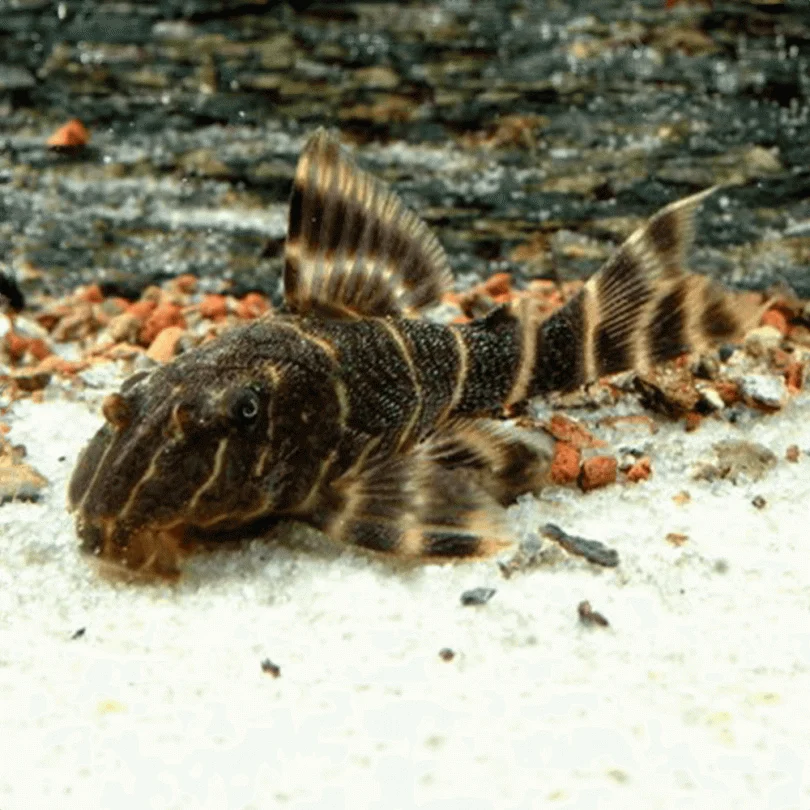
The Clown Pleco (officially designated as L103 or L104) originates from the warm, wood-dense river basins of the Amazon. Unlike standard plecos that can grow over a foot long and outgrow home aquariums, the Clown Pleco stays beautifully small. Their compact size and easygoing nature make them a classic favorite for freshwater community tanks.
Natural Behavior & Tank Mates
These fish are primarily nocturnal, meaning they are most active after the aquarium lights turn off. During the day, they love to find cozy hiding spaces.
Because they are entirely peaceful, they make ideal tank mates for a wide variety of small-to-medium tropical fish, including:
-
Tetras, Rasboras, and Guppies
-
Danios and Dwarf Gouramis
-
Corydoras Catfish and peaceful freshwater shrimp
Note on Territory: While they are incredibly friendly toward other species, Clown Plecos can be slightly protective of their favorite hiding spot against other bottom-dwellers. Ensure there are plenty of caves if keeping more than one bottom fish.
Aquarium Setup Essentials
To keep your Clown Pleco healthy and vibrant, your aquarium design should mimic their natural river habitats.
-
The Driftwood Requirement: This is a non-negotiable addition. Clown Plecos require real driftwood in their environment. They chew on the wood constantly to extract cellulose, which is vital for their digestive health.
-
Hiding Spots: Provide ample hiding options using smooth rocks, terra cotta breeding caves, or hollow logs.
-
Substrate & Plants: A soft sand or fine gravel substrate prevents injury to their delicate underbellies. They are completely safe to keep in live-planted aquariums, as they will not eat your prized aquatic vegetation.
Diet & Feeding Guidelines
A common misconception is that plecos can survive solely on leftover tank waste. While they do graze on naturally occurring algae, they require a targeted diet to thrive:
-
Sinking Wafers: Feed high-quality algae wafers and omnivore sinking pellets just before turning the tank lights off for the night.
-
Fresh Vegetables: Supplement their diet once or twice a week with blanched (slightly boiled) zucchini, cucumber, or shelled peas.
-
Protein Boosts: Offer occasional treats of frozen bloodworms or brine shrimp to support overall vitality and deep coloration.


Reviews
There are no reviews yet.