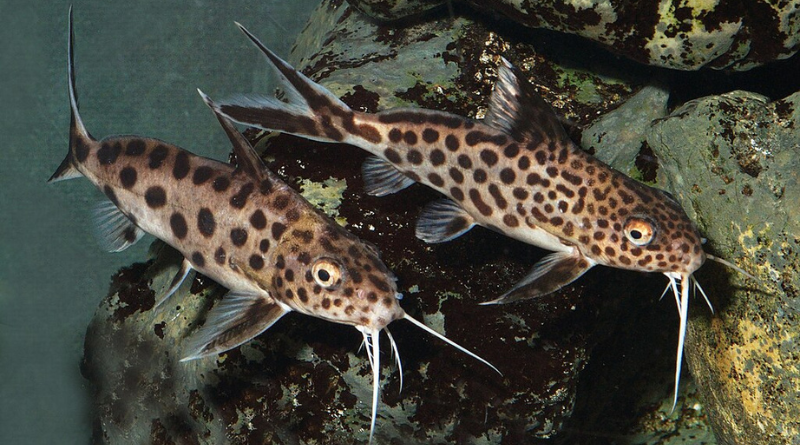
The Synodontis lucipinnis is one of the most desirable dwarf catfish species in the aquarium hobby. For years, it was commonly confused with its larger relative, Synodontis petricola, which earned it the hobbyist nickname “Dwarf Petricola”.
For a beginner aquarist, this fish is an absolute joy. They provide a continuous display of playful activity along the substrate and rockwork. They are schooling fish by nature; while a single catfish may become shy and reclusive, introducing a group of 3 to 5 individuals will bring out their confident, social behaviors.
Natural Habitat & Aquarium Setup
In the wild, these catfish live along the rocky shores of Lake Tanganyika. To make them feel at home in your aquarium, you should provide plenty of rockwork, caves, or ceramic pipes where they can swim through and explore.
-
Substrate: Use smooth sand or fine, rounded gravel. Like all catfish, they have sensitive whiskers called barbels that they use to hunt for food. Sharp gravel can damage these barbels.
-
Water Parameters: Because they originate from an African rift lake, they thrive in harder, alkaline water (pH above 7.5). They can adapt to neutral community water parameters if acclimated slowly, but they truly flourish alongside African Cichlids.
Diet and Feeding
Synodontis lucipinnis are opportunistic omnivores and are incredibly easy to feed. They will eagerly accept:
-
High-quality sinking catfish pellets or wafers
-
Flake foods that drop to the bottom
-
Frozen or live treats such as bloodworms, brine shrimp, and daphnia
As a bottom-dweller, they do a fantastic job eating any food missed by mid-water fish, keeping your aquarium substrate clean. However, ensure enough food intentionally reaches the bottom so they do not go hungry.
Compatibility and Tank Mates
This is one of the most peaceful species in the Synodontis family. They do not possess aggressive or territorial tendencies.
-
Great Tank Mates: Ideal for African Rift Lake cichlid setups (especially shell-dwellers and rock-dwellers), rainbowfish, gouramis, tetras, and larger livebearers.
-
Fish to Avoid: Avoid housing them with ultra-aggressive, massive predatory fish that could view the dwarf catfish as a meal. Avoid keeping them completely alone, as they prefer the company of their own kind.

Reviews
There are no reviews yet.