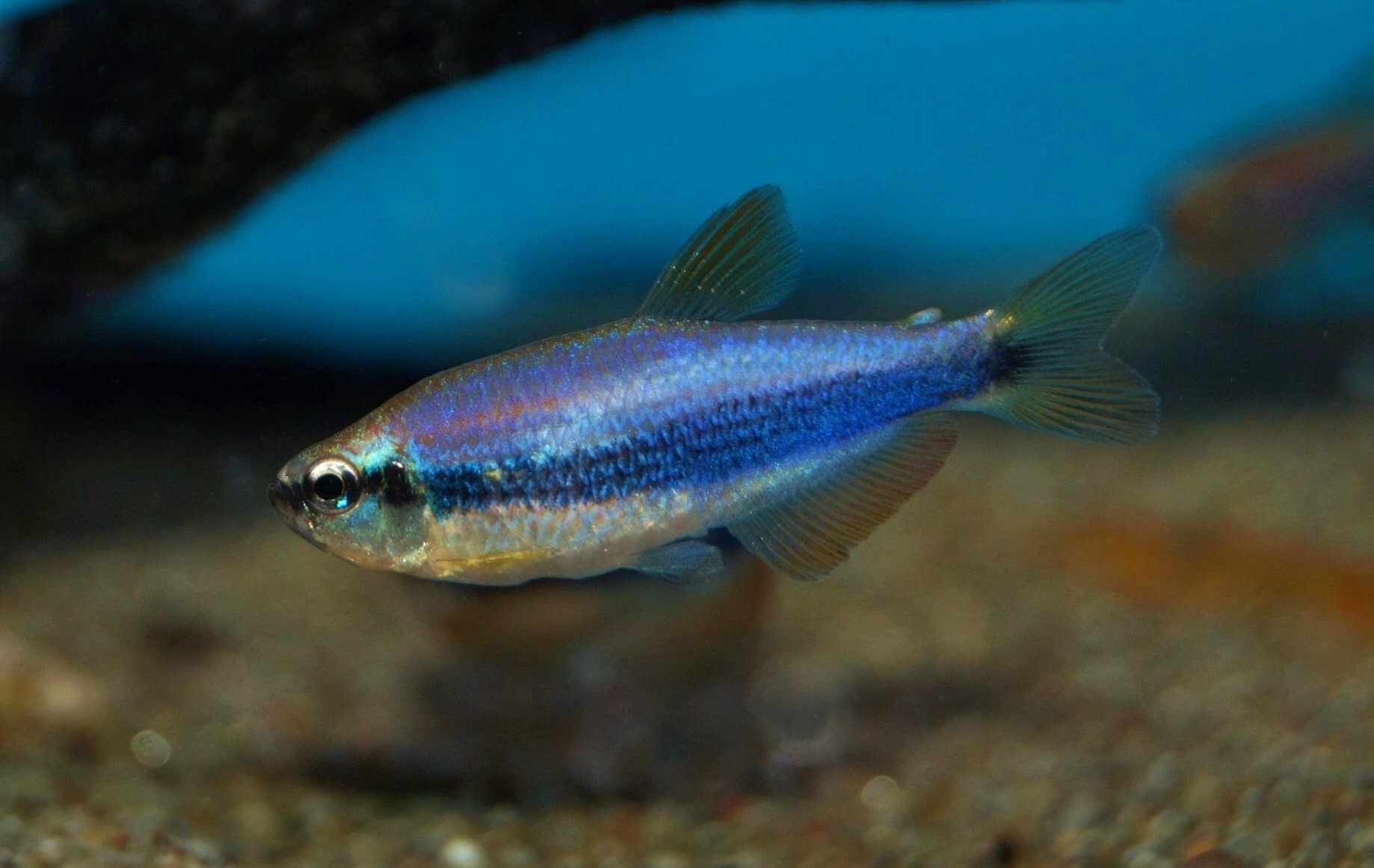
The Super Blue Royal Tetra, also frequently known as the Super Blue Emperor Tetra, is a premium color variant of the classic Inpaichthys kerri, originally native to the shaded forest streams of the Amazon basin in Brazil. While wild types feature a subtle purple hue, this captive-bred “Super Blue” strain has been carefully refined to display an astonishing, high-intensity metallic blue across its entire body.
Unlike true Emperor Tetras (Nematobrycon palmeri), Royal Tetras possess an adipose fin (a small fat fin between the dorsal and tail fin) and maintain a slightly more streamlined, elegant profile.
Beginner-Friendly Guide to Success
1. Ideal Tank Setup & Aquascaping
While these tetras are highly adaptable, they will exhibit their richest coloration when housed in an environment that mimics their natural habitat:
-
Aquarium Plants: Densely planted areas using easy live plants like Anubias, Java Fern, or Amazon Swords provide security, reducing stress and encouraging bolder swimming behavior.
-
Substrate & Decor: Using a dark sand or gravel substrate, alongside natural driftwood and rock formations, makes their neon-blue bodies visually “pop” while diffusing harsh reflection.
-
Lighting: Moderate lighting is ideal. Consider adding floating plants (like Frogbit or Salvinia) to cast natural shadows; this makes the fish feel safe and stimulates their reflective scales.
2. Social Behavior and Compatibility
The Super Blue Royal Tetra is a strict schooling species. Keeping them in a group of at least 6 individuals—ideally 10 or more—is essential. In proper schools, they establish a natural hierarchy where males engage in harmless, mesmerizing “dancing” displays to win the attention of females.
They are excellent candidates for a peaceful community tank. Ideal tankmates include:
-
Other small tetras (Neon, Cardinal, Rummy-Nose)
-
Rasboras and Danios
-
Corydoras Catfish and Otocinclus
-
Peaceful dwarf cichlids (such as Apistogramma)
-
Dwarf Shrimp and Snails (with plenty of moss cover)
Aquarist Note: Avoid housing them with large, aggressive, or predatory species (like Oscars or large Angels) that could view these peaceful tetras as food.
3. Simple Nutrition and Feeding Diet
Feeding your Super Blue Royal Tetras is incredibly straightforward, making them excellent for beginners. They are opportunistic omnivores and will readily accept high-quality commercial foods.
-
Daily Base: A premium micro-pellet or high-quality crushed flake rich in carotenoids to naturally boost their blue and purple pigments.
-
Weekly Treats: Supplement their diet 2–3 times a week with live or frozen foods such as Baby Brine Shrimp, Daphnia, or Bloodworms. This variety promotes optimal health, longevity, and successful spawning conditions.
4. Water Maintenance Routine
To keep your aquarium crystal clear and your tetras healthy, perform a weekly 15% to 20% water change using a gravel vacuum to clear away waste. Ensure your aquarium filter provides a gentle to moderate flow, as they prefer calm waters over high-velocity currents.
Reviews
There are no reviews yet.