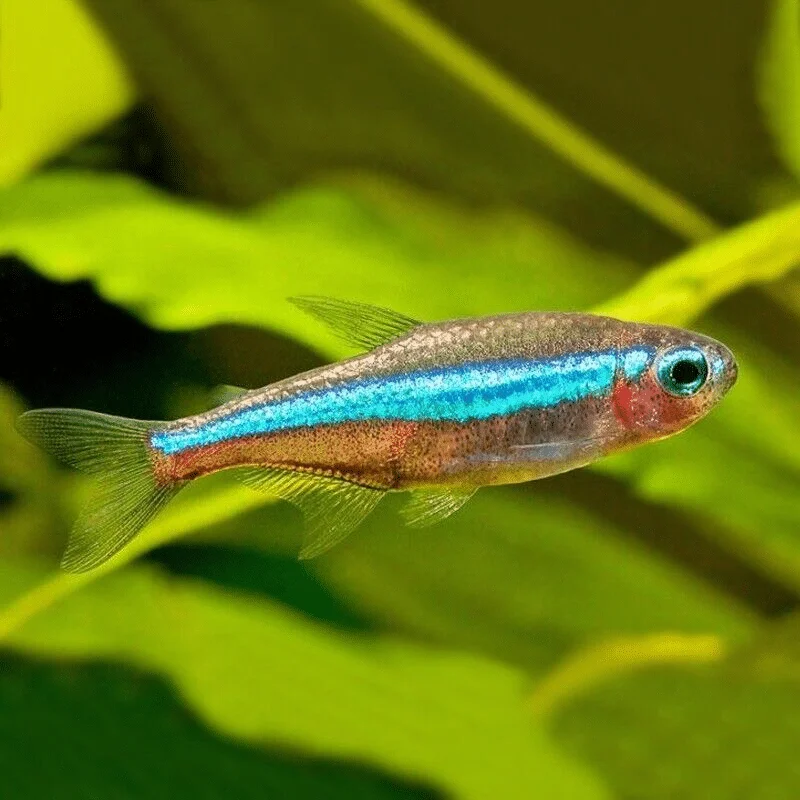
The Green Neon Tetra is a hidden gem in the freshwater aquarium hobby. While closely resembling the classic Neon Tetra, Paracheirodon simulans distinguishes itself by lacking the deep red underbelly patch, replacing it with a subtle, dark hue that allows its iridescent neon stripe to truly pop. This shimmering stripe spans almost the entire length of its translucent body, creating an unforgettable shimmering effect when they move together in a synchronized school.
Ideal Tank Setup & Environment
Because they are native to the slow-moving blackwater rivers of South America (such as the Rio Negro), these tetras thrive in a well-decorated environment that mimics nature.
-
Aquascaping: They show their best colors against a dark substrate and a dense backdrop of live aquarium plants (like Java Fern, Anubias, or Amazon Swords). Floating plants can also help diffuse bright light, making them feel secure.
-
Water Conditions: As a beginner, the most critical element to remember is stability. Ensure your tank is fully cycled before adding them. They prefer soft, slightly acidic water, but keeping the water clean with a reliable filter and regular, partial water changes is the ultimate key to their health.
Behavior & Tankmates
Green Neon Tetras are strictly peaceful community fish. They are happiest and healthiest when kept in a school of at least 6 to 10 individuals—larger groups drastically reduce their stress levels and encourage natural schooling patterns.
Recommended Tankmates include:
-
Other small, peaceful nano fish (like Chili Rasboras or Ember Tetras)
-
Small bottom-dwellers (like Corydoras Catfish or Otocinclus)
-
Invertebrates (such as Cherry Shrimp and Amano Shrimp)
Warning for Beginners: Avoid housing them with large or aggressive fish (like Angels or larger Cichlids), as the tiny Green Neon Tetra can easily become an accidental snack.
Feeding and Nutrition
Feeding these neon beauties is incredibly simple, making them perfect for those new to the hobby. They are omnivores and will readily accept high-quality crushed flakes or micro-pellets. To keep their colors vibrant and boost their immune systems, supplement their diet once or twice a week with small live or frozen foods, such as baby brine shrimp, daphnia, or cyclops. Ensure the food particles are small enough to fit into their tiny mouths.
Reviews
There are no reviews yet.