
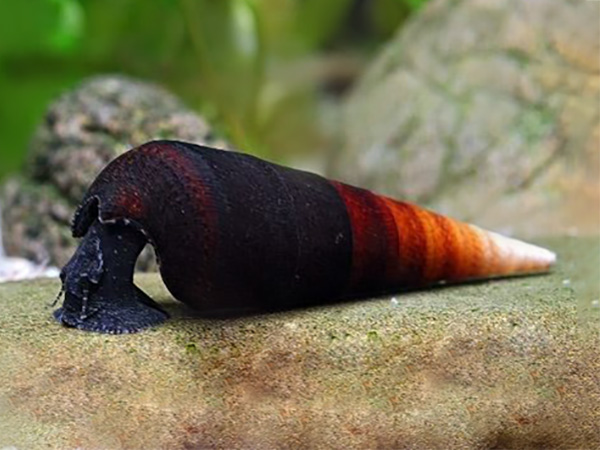
The Neritina turrita “Zebra” is a highly regarded freshwater snail known for its decorative zebra‑striped shell and very efficient algae‑grazing behaviour. Its compact size, peaceful temperament, and simple requirements make it an excellent choice for beginner and experienced aquarists alike.
Appearance and behaviour
-
Distinctive black and yellow to golden stripes give the shell a natural “zebra” pattern that stands out beautifully against plants and hardscape.
-
The snail remains small (up to about 3 cm), so it is suitable for nano aquariums as well as larger community tanks.
-
It is a calm, non‑aggressive species that coexists well with shrimp, small peaceful fish, and other invertebrates when predatory tank mates are avoided.
Aquarium role and benefits
-
Actively grazes on soft algae films, green spot algae, and biofilm, helping to keep glass, rocks, roots, and decorations clean and clear.
-
Has a low bioload and produces little waste compared with its cleaning effect, making it a very efficient natural maintenance helper.
-
Does not reproduce in freshwater, so there is no risk of a snail “infestation” in the display tank.
Water parameters and tank setup (beginner friendly)
-
Recommended parameters: temperature around 22–28 °C with a stable pH near neutral to slightly alkaline (approximately 7.0–8.0) and moderate to higher hardness to support strong shell development.
-
A minimum volume from 30 litres is recommended for a small group, as more water volume provides greater stability and more algae surfaces.
-
Use gentle filtration and avoid very strong currents, and always maintain a tight‑fitting lid because nerite snails may climb above the waterline.
Substrate, décor, and planting
-
A soft or smooth substrate (sand or fine gravel) helps protect the shell and foot while the snail moves and grazes.
-
Hardscape elements such as rocks, driftwood, and roots provide surface area for algae and biofilm growth, which increases natural grazing opportunities.
-
Planted aquariums are ideal: these snails do not eat healthy plants but will help keep plant leaves and décor free of soft algae films.
Feeding and care
-
In a mature aquarium with visible algae and biofilm, much of the diet is naturally available on glass and decorations.
-
In very clean tanks or newer setups, supplement with algae wafers, specialized invertebrate foods, or blanched vegetables (such as spinach or zucchini), removing leftovers to maintain water quality.
-
Provide a calcium source (hard water, mineral stones, or cuttlebone) to prevent shell pitting and ensure long‑term shell strength.
Compatibility and stocking tips
-
Keep with peaceful community fish and shrimp; avoid species that eat or nip snails (e.g., some loaches, pufferfish, or large cichlids).
-
For algae control, one to several individuals are usually sufficient depending on tank size and algae level; they are best introduced into established aquariums rather than newly cycled tanks.
-
Acclimate slowly to your water conditions to avoid sudden parameter changes, especially in very soft or very hard water systems.
Reviews
There are no reviews yet.