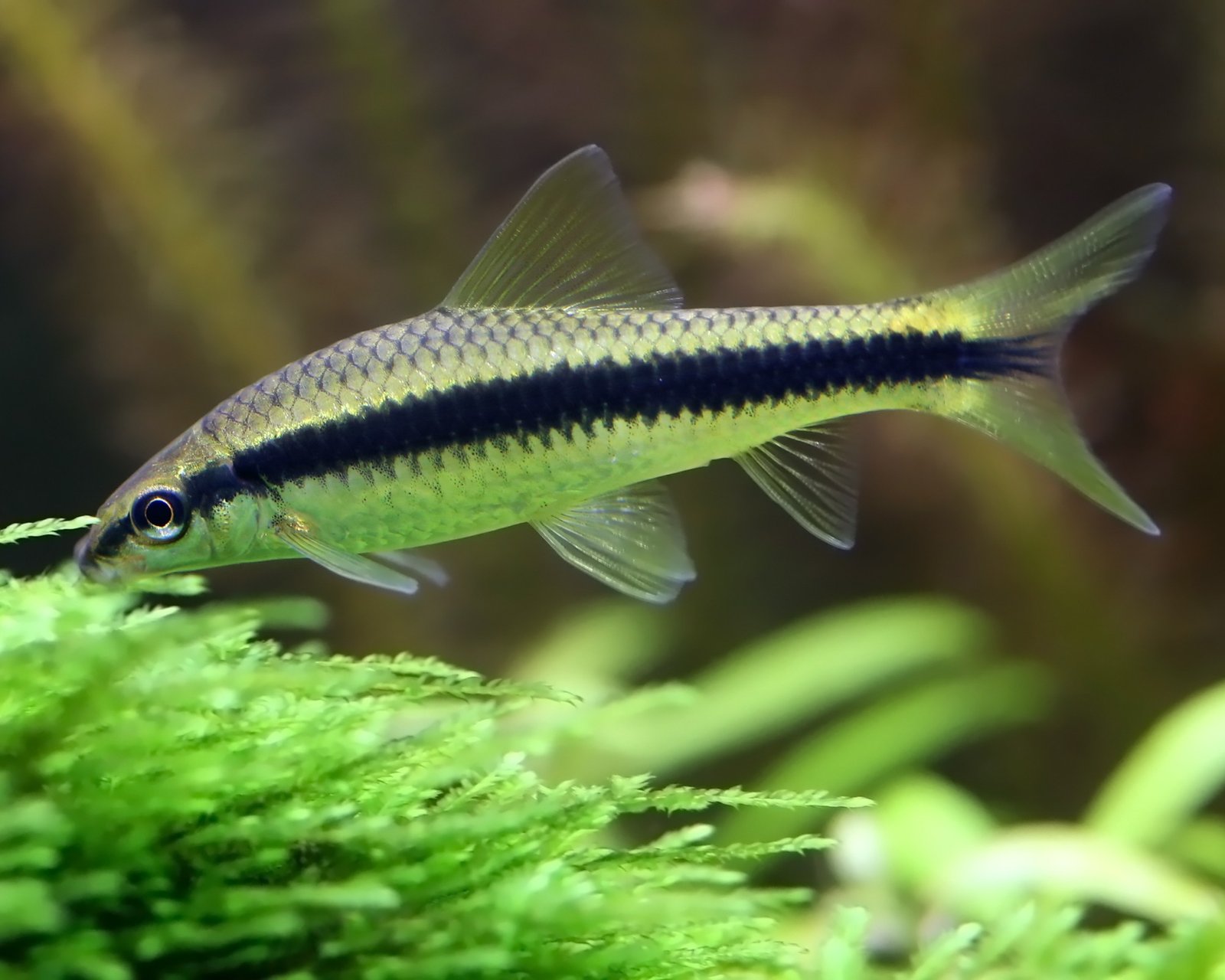
The Siamese Algae Eater (Crossocheilus oblongus) is a freshwater cyprinid widely recognised as one of the most efficient algae‑eating fish available for home aquariums.
It naturally inhabits clear, flowing rivers and streams in Southeast Asia, where it spends most of its time grazing on algae and biofilm on rocks, roots and submerged surfaces.
For the beginner aquarist, this species offers an excellent combination of hardy nature, peaceful temperament and strong algae‑control ability, making it a valuable addition to medium and large community tanks.
Ideal tank and water parameters
To house Crossocheilus oblongus correctly, plan for a spacious aquarium of at least 200 litres, as the fish is very active and can reach around 12–15 cm in adult size.
Provide clean, well‑oxygenated water with efficient filtration, gentle to moderate current and regular partial water changes to keep ammonia and nitrite at zero and nitrates low.
Recommended water parameters:
-
Temperature: 24–28 °C, typical tropical range.
-
pH: 6.0–7.5, leaning slightly acidic to neutral.
-
General hardness: 8–12 °dGH, moderate hardness.
These conditions closely reproduce its natural river habitat and help maintain strong immunity and natural grazing behaviour.
Aquascape and tank setup
This species appreciates a layout that mimics a gently flowing river, with a mix of smooth rocks, driftwood and hardy live plants such as Java fern, Anubias and fast‑growing stems.
Use sand or fine gravel so the fish can comfortably forage along the bottom without damaging its sensitive mouthparts while grazing.
To create a visually appealing, user‑friendly setup for beginners:
-
Add foreground plants and mosses on wood and stones to provide natural grazing surfaces and shelter.
-
Leave open swimming lanes along the front and centre of the tank so these energetic fish can move freely.
-
Use a tight‑fitting lid, as active algae eaters can occasionally jump, especially in startled conditions.
Including several high‑quality images on the product page (side profile of the fish, group in a planted tank, close‑up while grazing on algae) will help new aquarists visualise how to integrate the species into their aquascape.
Behaviour, tank mates and group size
Crossocheilus oblongus is generally peaceful and does well in community aquariums with other calm, similar‑sized species such as tetras, rasboras, gouramis and small to medium catfish.
Avoid housing it with highly aggressive or very territorial fish that may stress it or outcompete it at feeding time.
The fish is active throughout the day, occupying the lower and mid water levels while constantly browsing surfaces for algae.
Keeping it in small groups can encourage natural behaviour and reduce shyness, but ensure the aquarium has enough floor space and hiding spots to spread out territories.
Diet and algae‑eating efficiency
While famous for its ability to eat stubborn algae, including hair and beard algae, Crossocheilus oblongus should not be considered the sole solution to algae problems but part of a balanced maintenance routine.
For optimal health, supplement its natural grazing with a varied diet of sinking algae wafers, high‑quality vegetable‑rich pellets, blanched vegetables such as zucchini or spinach, and occasional live or frozen foods like brine shrimp.
Feed modest portions once per day and allow the fish to graze on natural algae in between, which supports both water quality and the fish’s digestive health.
Avoid overfeeding, because excess food reduces algae consumption and can quickly lead to poor water quality, especially in beginner setups.
Care level and suitability for beginners
Thanks to its robust nature and tolerance of a reasonable range of water parameters, the Siamese Algae Eater is suitable for beginners who are willing to perform basic weekly maintenance.
Regular partial water changes, careful stocking levels and consistent feeding habits are usually enough to keep this species healthy and active for many years.
For new aquarists, this fish offers a practical benefit (algae control) while also being an engaging, constantly moving addition that adds life and function to planted tanks.

Reviews
There are no reviews yet.