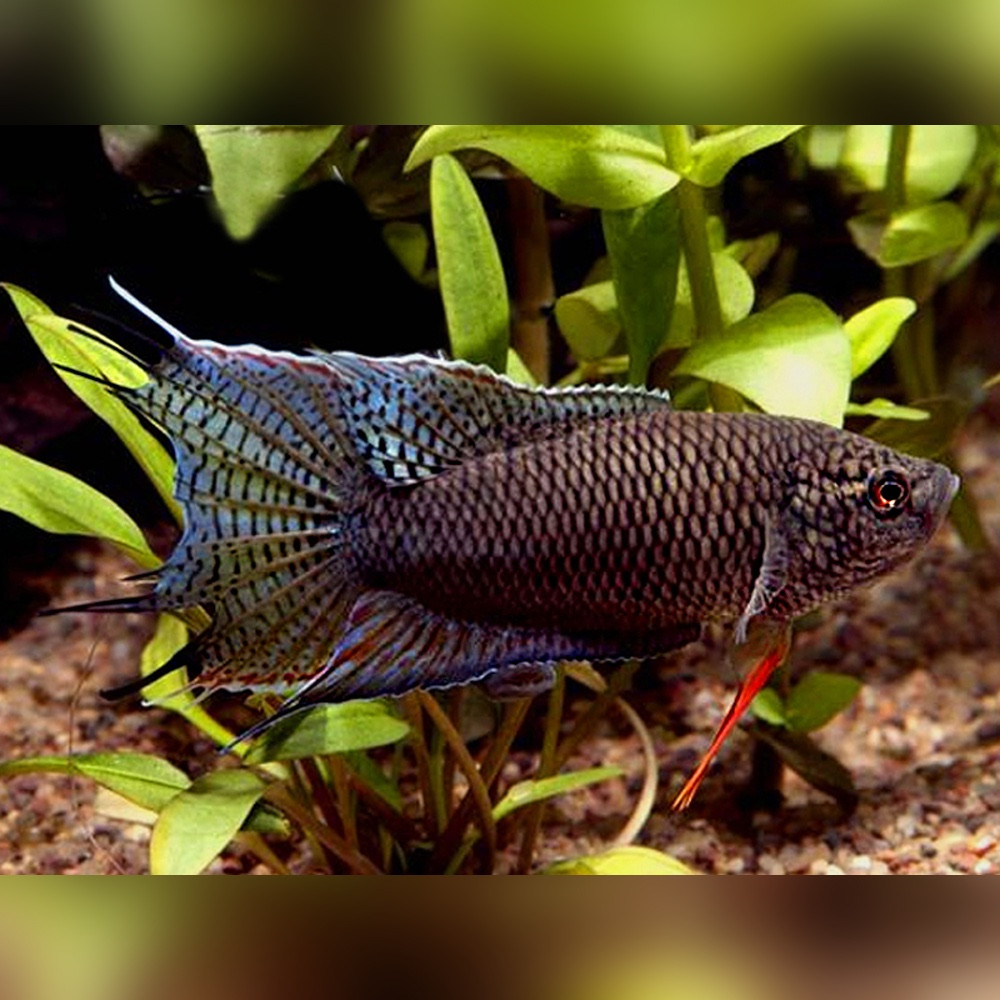
The Black Paradise Fish brings an air of dramatic elegance to the home aquarium. While they may appear understated in plain pet store holding tanks, they undergo a stunning transformation once settled into a well-planted environment. As they mature, their bodies darken into deep shades of charcoal and pitch black, beautifully contrasted by elongated, veil-like fins that shimmer with subtle turquoise, silver, and red hints under proper aquarium lighting.
The elegant profile of an adult Macropodus spechti.
Beginner-Friendly Care & Resiliency
For beginners, the Macropodus spechti is highly forgiving of minor rookie mistakes. Because they evolved in oxygen-poor habitats, they are incredibly durable regarding water parameters.
The presence of the labyrinth organ means they do not rely solely on dissolved oxygen in the water. However, a clean, cycled aquarium with regular partial water changes remains essential to keep them thriving and free from stress-related illness.
Tank Setup and Environment
To see your Black Paradise Fish display its boldest behavior and darkest colors, aim to replicate its natural environment:
-
Aquascaping: Utilize plenty of live or silk plants (such as Java Fern, Anubias, and floating water lettuce). Floating plants are highly recommended, as they diffuse harsh light and provide anchor points if the fish decides to build a bubble nest.
-
Filtration: These fish prefer calm waters. Use an adjustable filter or a high-quality sponge filter to prevent strong currents from tossing them around the tank.
-
Substrate: A dark gravel or sand substrate will visually emphasize the deep black pigments of your fish.
Diet and Nutrition
Feeding your Black Paradise Fish is incredibly straightforward, as they are unpicky omnivores. For optimal health and color depth, provide a varied diet:
-
Daily Base: High-quality floating tropical flakes or micropellets.
-
Nutritional Treats: Supplement 2–3 times a week with frozen or live foods such as bloodworms, brine shrimp, or daphnia.
Temperament and Tank Mates
Understanding their behavior is the key to long-term success. Males can be territorial, especially toward other males of their own kind or fish with a similar look (like long-finned Bettas or Gouramis).
Beginner Tip: It is highly recommended to keep only one male per tank unless you are managing a very large setup.
Excellent Tank Mates Include:
-
Robust, peaceful schooling fish like Harlequin Rasboras, Zebra Danios, or White Cloud Mountain Minnows.
-
Bottom-dwelling scavengers such as Corydoras Catfish or Kuhli Loaches.
-
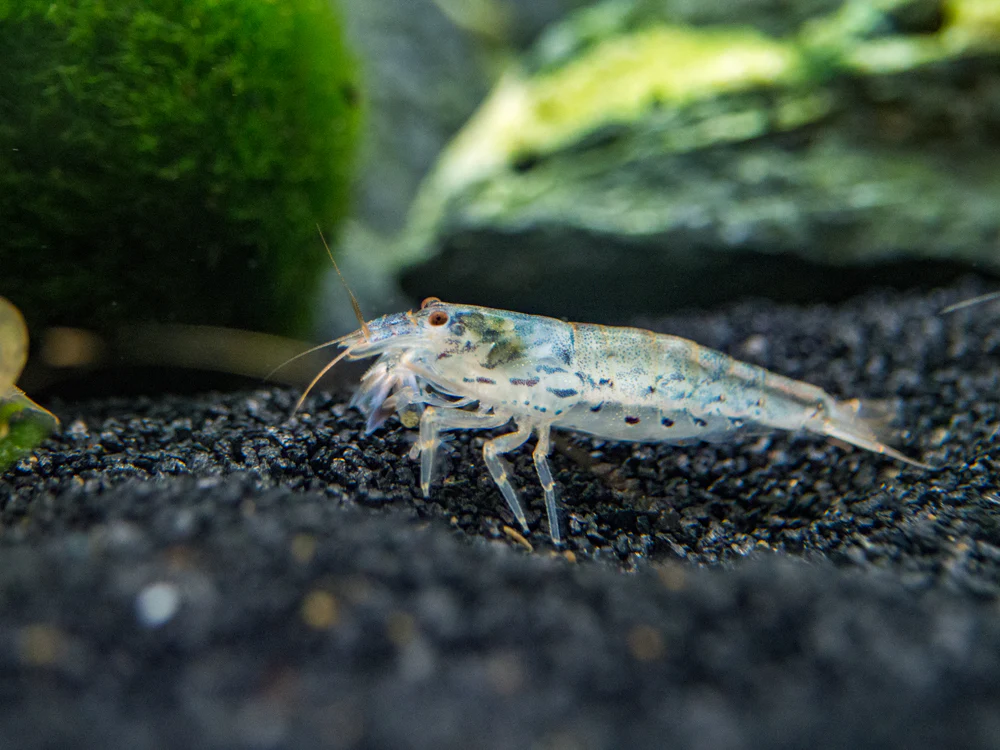
Avoid housing them with notorious fin-nippers (like Tiger Barbs) or very small, delicate shrimp species that might look like a snack.


Reviews
There are no reviews yet.