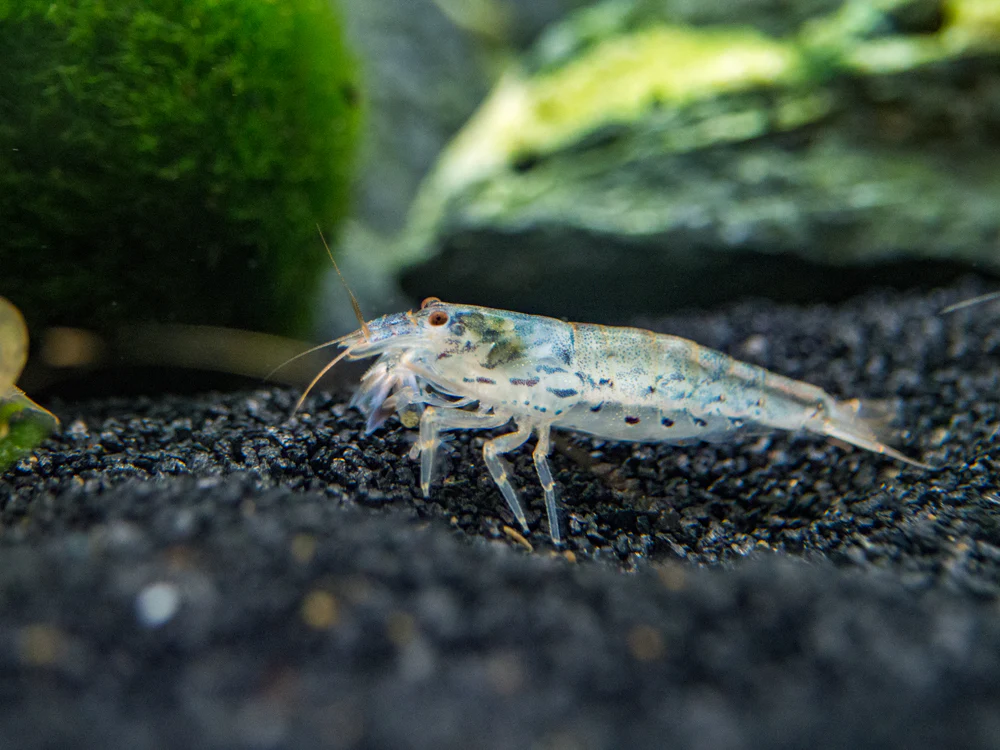
The Green Lace Filter Shrimp (Atyoida pilipes), occasionally known as the Green Dwarf Fan Shrimp, is native to fast-flowing streams across South Asia and the Indo-Pacific. It brings a completely distinct behavioral dynamic to home aquaria compared to regular bottom-feeding dwarf shrimp like Cherries or Amanos.
Instead of picking at algae on surfaces, they actively seek out areas of high water movement—such as the output of an aquarium filter or powerhead—and extend their specialized fan appendages to catch passing organic matter, microalgae, and floating microorganisms. Watching them wave their fans in the current is one of the most rewarding sights in the aquarium hobby.
Natural Behavior & Tank Setup Advice
To help your new Atyoida pilipes thrive, a few simple tank setups will make them feel right at home:
-
Provide a Strong Current: Because they feed from the water column, a reliable filter or a small powerhead generating a moderate-to-strong flow is necessary.
-
Perches and Feeding Stations: Place rocks, driftwood branches, or sturdy live plants directly in front of your water flow. Your shrimp will climb these perches to position themselves perfectly in the current to catch food.
-
Hiding Places: Like all invertebrates, these shrimp shed their hard outer shells (a process called molting) as they grow. During the few days after a molt, their new shell is soft. Provide caves, PVC pipes, or dense mosses where they can rest safely until their new shell hardens.
Dietary Needs for the Beginner
Because they feed on suspended particles, a mature tank with a healthy bio-film is ideal. In clean, home aquariums, they cannot survive on leftover fish flakes alone.
Important Feeding Tip: You must actively supplement their diet with finely powdered foods. Dissolve powdered spirulina, baby shrimp diets, or crushed high-quality flakes in a cup of aquarium water and use a pipette or syringe to gently release it just upstream of the shrimp.
If you ever notice your Green Lace Shrimp picking constantly at the gravel or substrate floor, it is a clear warning sign that there is not enough food suspended in the water, and they are hungry.
Tank Mates & Compatibility
Atyoida pilipes are completely defenseless. They lack claws and have no means of harming other tank inhabitants. They are excellent roommates for:
-
Small, peaceful community fish (such as Neon Tetras, Guppies, Rasboras, and Corydoras catfishes)
-
Other peaceful dwarf shrimp (Neocaridina species) and aquatic snails
Avoid: Large, predatory, or aggressive tank mates. Cichlids, Barbs, Bettas, and large Goldfish will view these gentle filter feeders as a snack or harass them into hiding continuously.
Acclimation Guide
When your new shrimp arrive, float the sealed transport bag in your aquarium for 15-20 minutes to match the water temperatures. Slowly introduce small amounts of your tank water into the bag over the span of 45 minutes (drip acclimation is highly recommended) to allow their bodies to safely adjust to your water chemistry before releasing them.
Reviews
There are no reviews yet.