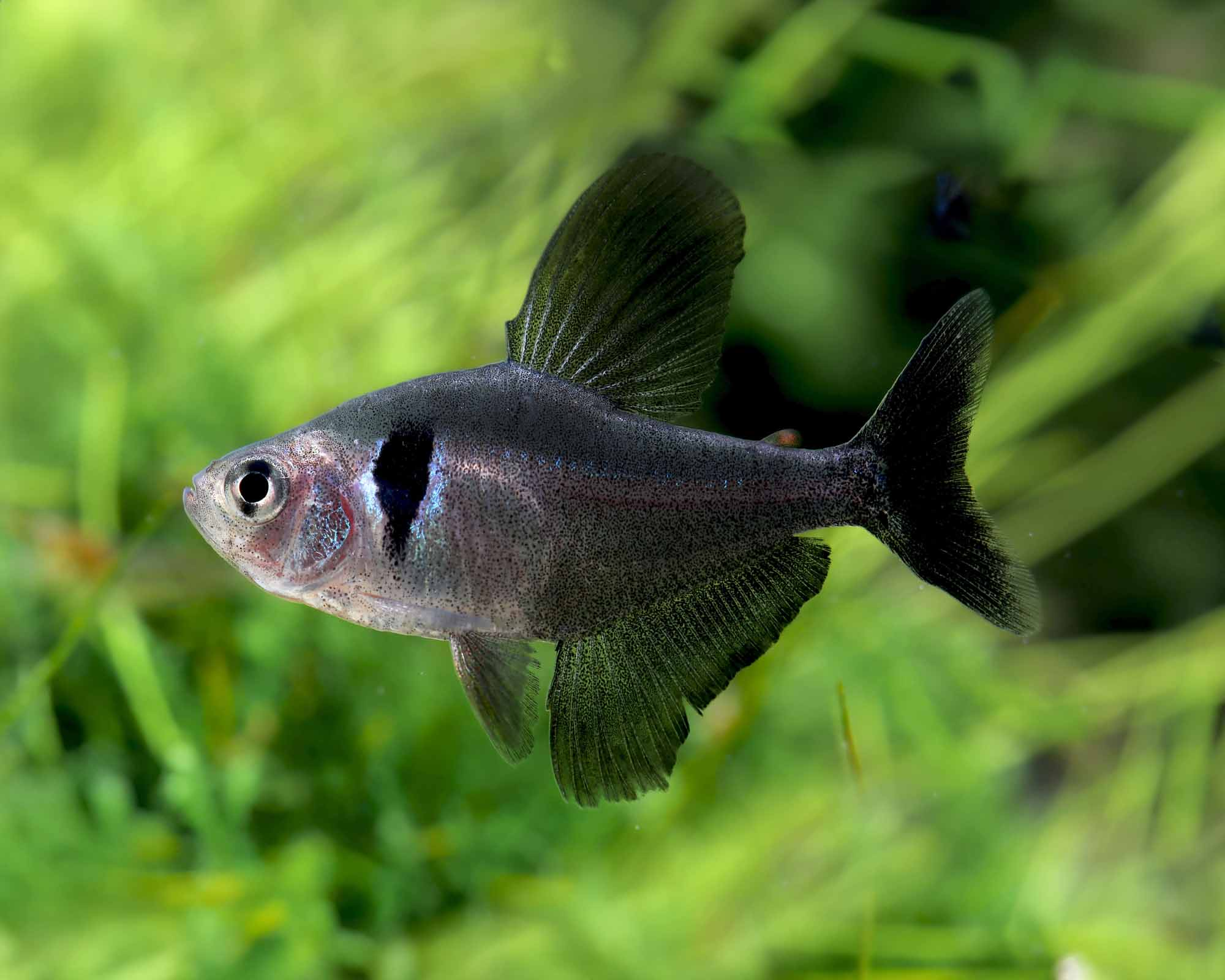
The Black Phantom Tetra stands out in the aquarium hobby due to its stunning contrast against vibrant green live plants. While they may appear slightly pale when first introduced due to transport stress, they quickly develop deep smoky gray-to-jet-black tones as they settle into a stable environment.
A fascinating aspect of this species is their clear gender differences:
-
-
Males: Possess dramatic, elongated black dorsal and anal fins. When courting or establishing territories, males engage in harmless, beautiful “fin-flaring” standoffs.
-
Females: Display noticeably shorter fins adorned with a distinct reddish hue on their pelvic, anal, and adipose fins, creating a gorgeous contrast within the school.
-
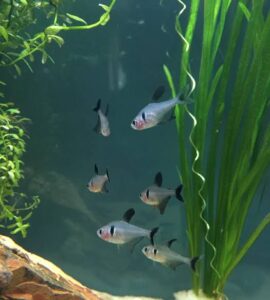
A healthy school displaying natural group behaviors in a planted habitat..
Aquarium Setup Guidelines
To replicate the slow-moving, shaded forest streams of their native South American habitats, observe the following layout principles:
-
Substrate & Decor: Utilize a dark sand or gravel substrate. This mimics natural riverbeds and dramatically intensifies the fish’s dark coloration. Incorporate driftwood roots and smooth rocks to create natural boundary lines.
-
Aquascaping (Plants): Densely plant the background and sides of the tank using hardy species like Amazon Swords, Java Fern, or Anubias. Always leave the center area open to accommodate their active swimming habits.
-
Lighting: Subdued or dim lighting is highly recommended. Floating plants like Frogbit or Salvinia are perfect for filtering intense light, making your tetras feel secure enough to swim in the open water.
Group Dynamics & Ideal Tank Mates
As an obligate schooling (or shoaling) species, Black Phantom Tetras should never be kept alone. A minimum group of 6 is required, though a school of 8 to 12 displays significantly better social dynamics. In proper numbers, any potential fin-nipping tendencies are entirely contained within their own group as harmless posturing.
They are exemplary community residents and pair perfectly with:
-
Other peaceful tetras (such as Neon, Cardinal, or Rummy-nose Tetras)
-
Rasboras and Danios
-
Peaceful bottom-dwellers (like Corydoras catfish and smaller Loricariid plecos)
-
Dwarf Gouramis and non-aggressive dwarf cichlids (like Apistogramma)
Beginner Warning: Avoid housing them with large, aggressive predators (like Oscars or large cichlids) that can easily swallow them. Additionally, exercise caution if placing them with slow-moving, long-finned fish like Fancy Guppies or Male Bettas, as small groups of tetras may nip at trailing fins.
Feeding & Simple Maintenance
Feeding these omnivorous fish is incredibly simple. To maintain their health and bring out their finest colors, offer a baseline diet of high-quality tropical flake food or micro-pellets. Supplement this two to three times a week with frozen or live treats such as baby brine shrimp, daphnia, or bloodworms. Because they have small mouths, ensure all food particles are appropriately bite-sized.
For routine maintenance, perform a standard 20% to 25% water change every two weeks using a gravel vacuum. This consistency removes excess nitrates and keeps water chemistry stable, ensuring your Black Phantom Tetras live a long, healthy life of up to five years.
Reviews
There are no reviews yet.