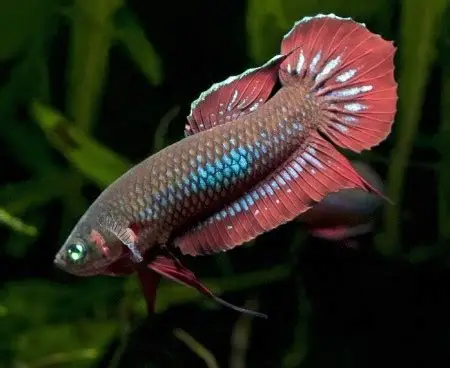
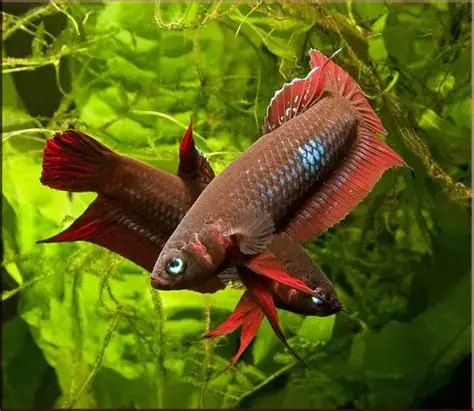
The Claret Betta, or Betta coccina (also known as Scarlet Betta), is a captivating wild-type betta renowned for its deep wine-red to scarlet body coloration. Native to Southeast Asia’s slow-moving blackwater habitats, this species brings exotic beauty and lively behavior to home aquariums. Suitable for beginners, it thrives with basic care and rewards aquarists with its bold displays.
Ideal Tank Setup
Set up a minimum 10-gallon tank to give your Claret Betta ample swimming space—avoid bowls or vases. Use a soft substrate like fine sand or peat moss to mimic its natural environment, and include dense live plants such as Java moss, Anubias, or floating species for cover and bubble nest building. A gentle sponge filter provides oxygenation without strong currents that could stress this labyrinth fish. Dim lighting with leaf litter or Indian almond leaves helps replicate blackwater conditions.
Planted nano tank setup with Claret Betta, featuring hiding spots and low flow.
Water Parameters
Maintain stable conditions: temperature at 24-28°C (75-82°F), pH 4.0-6.5, and very soft water (low GH/KH). Use RO water or rainwater treated with dechlorinator for best results. Test weekly and perform 25-50% water changes to prevent ammonia buildup—overfeeding and poor maintenance are common beginner pitfalls. Cycle your tank fully before adding the fish.
Feeding Guide
Feed sparingly: 2-3 pellets per day, sized like the fish’s eye, plus treats like frozen brine shrimp, daphnia, or mosquito larvae 2-3 times weekly for variety. Remove uneaten food to keep water pristine. This varied diet supports vibrant colors and health.
Behavior and Compatibility
Claret Bettas are territorial males that flare impressively but can coexist with peaceful nano species like snails or shrimp in a well-planted tank. Keep solo or in species-only setups to minimize stress. Males build foam nests, making them fascinating to observe.
Male Claret Betta flaring under floating plants, displaying classic fighter behavior.
Health and Maintenance Tips
Watch for fin rot or ich from poor water quality—treat with aquarium salt (1 tsp per 5 gallons) or medications as needed. Lifespan reaches 3-5 years with proper care. Quarantine new fish and avoid copper-based treatments.

Reviews
There are no reviews yet.