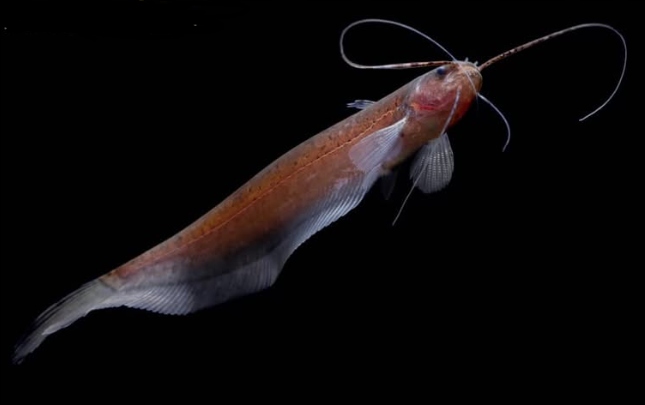
Bring a piece of Southeast Asia’s pristine wild blackwater streams into your home with the Hasselt’s Leaf Catfish (Silurichthys hasseltii). Known also as the Asian Leaf Cat, this elusive species is celebrated for its remarkable evolutionary adaptations. Its elongated body, combined with an anal fin completely fused to its tail fin, gives it the distinct silhouette and swimming pattern of a leaf drifting gently in the current.
For the beginner or intermediate aquarist, this fish offers a delightful introduction to the world of specialized biotopes without requiring overly complex management.
Natural Habitat & Ideal Tank Setup
In the wild, Silurichthys hasseltii populates well-shaded, slow-moving forest streams rich in organic matter. To ensure your catfish feels safe and thrives:
-
-
Aquarium Decor: Provide plenty of hiding spots using natural driftwood, tangled root networks, and a generous layer of aquarium-safe leaf litter (such as Indian Almond leaves).
-
Lighting Conditions: They prefer dim, diffused lighting. Utilizing floating aquatic plants can help diffuse light and mimic their natural forest canopy.
-
Substrate Selection: A soft, sandy substrate prevents damage to their sensitive, elongated sensory barbels (whiskers).
-
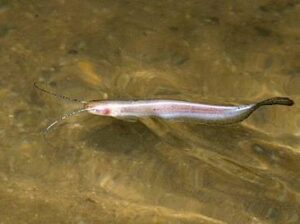
Natural swimming posture near the water surface.
Feeding & Nutrition for Beginners
While categorized as a carnivore and micropredator, feeding them in captivity is straightforward. Because they are naturally active after the lights go out, it is highly recommended to feed them shortly after turning off your main aquarium lights.
-
Preferred Foods: They thrive on frozen foods like bloodworms, brine shrimp, and mysis shrimp.
-
Live Foods: Occasional treats of live daphnia or mosquito larvae will stimulate their natural foraging behaviors.
-
Prepared Diets: Over time, they can often be acclimated to sinking carnivore pellets or high-quality freeze-dried options.
Compatibility & Tank Mates
The Hasselt’s Leaf Catfish is exceptionally peaceful and poses no threat to tank mates that are too large to be considered food. However, because they are shy and slow-moving, they can easily be outcompeted for food by aggressive or fast-swimming fish.
Ideal companions include other gentle, slow-moving species such as peaceful tetras, rasboras, dwarf cichlids, or passive bottom-dwellers like Corydoras catfish. Avoid housing them with large, overly boisterous, or aggressive species.

Reviews
There are no reviews yet.