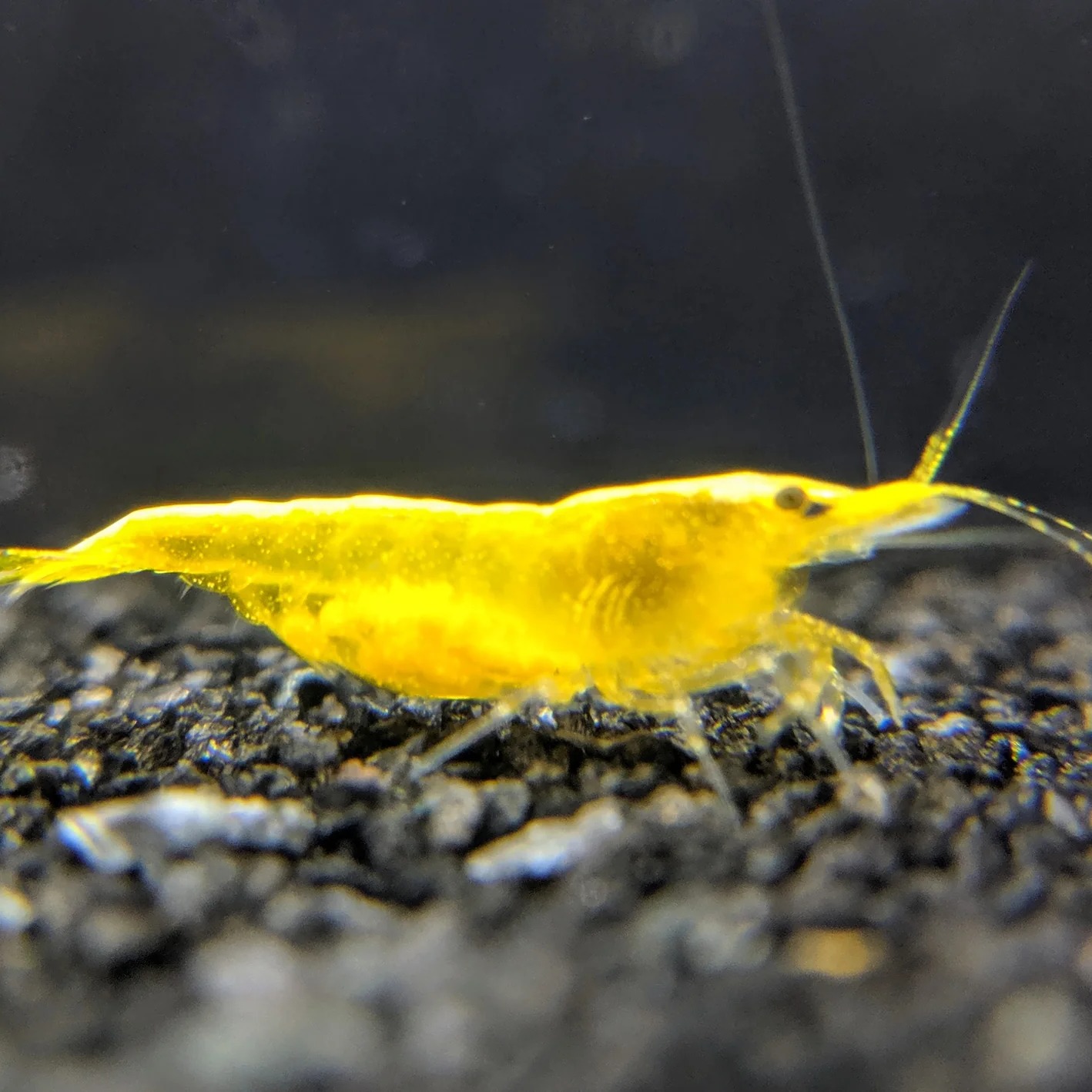
The Yellow Cherry Shrimp (Neocaridina heteropoda, often classified as Neocaridina davidi) is a highly coveted color morph of the classic dwarf shrimp family. Their cheerful coloration beautifully contrasts against dark substrates, lush green live plants, and natural driftwood. If you are a beginner looking to venture into live invertebrates, this species offers the highest success rate due to its resilient nature and forgiving care requirements.
Key Benefits for Your Aquarium
-
Natural Algae Control: These tireless scavengers actively consume hair algae, brown diatoms, and organic detritus, significantly reducing your tank maintenance.
-
Safe for Live Plants: Unlike certain crayfish or snails, Yellow Cherry Shrimp will never damage or consume healthy live aquarium plants. They simply clean them.
-
Fascinating Social Behavior: They are highly active during daylight hours, constantly interacting, swimming, and foraging across the substrate in charming groups.
Comprehensive Care & Tank Setup Guide
1. Aquarium Environment & Substrate
While a 5-gallon tank is acceptable, a 10-gallon aquarium provides a much more stable ecosystem for beginners. To make their yellow pigment pop, we highly recommend using a dark substrate such as black aqua-soil or black sand. Ensure your tank is packed with hiding spots like Java Moss, Subwassertang, or specialized ceramic shrimp shelters. These safety zones are critical when the shrimp molt (shed their outer shell to grow).
2. Filtration Requirements
Because dwarf shrimp and their tiny babies (shrimplets) can easily be drawn into standard filter intakes, a Sponge Filter powered by an air pump is strongly recommended. Alternatively, if you use a hang-on-back or canister filter, ensure you cover the intake tube securely with a fine stainless steel or pre-filter sponge mesh guard.
3. Nutrition & Feeding
Yellow Cherry Shrimp are omnivorous grazers. In a mature tank, they primarily feed on naturally occurring biofilm and algae. However, you should supplement their diet 2 to 3 times a week with high-quality specialized shrimp pellets, blanched vegetables (such as zucchini or spinach), and calcium supplements.
A Note on Calcium: Shrimp require adequate calcium and mineral hardness (GH) in the water to successfully form their new exoskeletons during the molting process.
4. Tankmates and Compatibility
These shrimp are completely defenseless and sit at the bottom of the aquatic food chain. They should only be housed with small, peaceful tankmates.
-
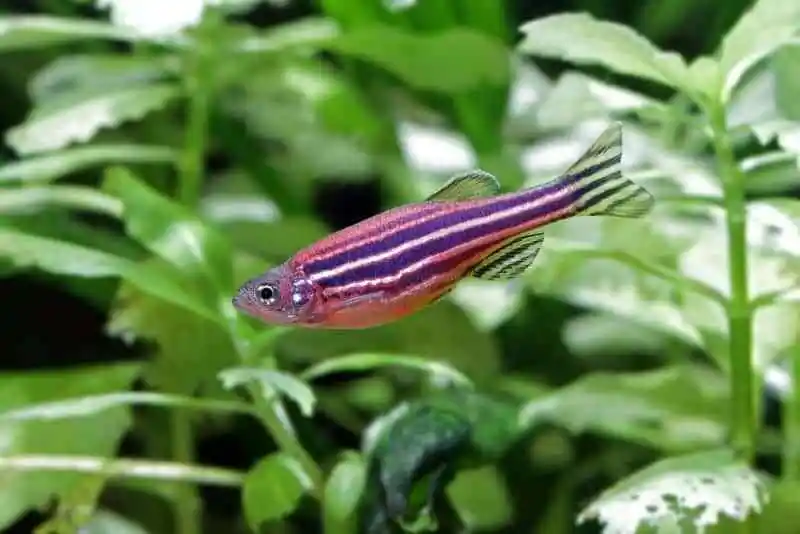
Excellent Tankmates: Otocinclus catfish, Neon Tetras, Harlequin Rasboras, Guppies, and peaceful freshwater snails (like Nerite or Mystery snails).
-
Avoid Completely: Cichlids, Angelfish, Barbs, and large Bettas, which will quickly view your shrimp as an expensive gourmet snack.
Important Acclimation Instructions
To guarantee the health of your new arrivals, always use the Drip Acclimation Method upon delivery. Slowly dripping your aquarium water into the shipping container over a period of 1 to 2 hours helps their sensitive systems adapt smoothly to changes in pH, temperature, and mineral levels, preventing osmotic shock.
Reviews
There are no reviews yet.