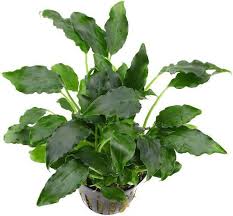
Introduction to a Unique Aquatic Marvel
For years, aquarists looking for easy-to-grow foreground plants were limited to a handful of species. Enter Schismatoglottis prietoi. While most members of the Schismatoglottis family are terrestrial rain forest plants, this specific species has adapted flawlessly to a fully submerged life. It stays naturally compact, growing up to 5–10 cm in height, making it an exceptional choice for both large aquascapes and nano tanks.
Why It Is Perfect for Beginners
If you are new to keeping live aquarium plants, Schismatoglottis prietoi is highly forgiving. It is naturally robust and possesses tough, leathery leaves that are resistant to herbivorous fish and snails.
Unlike many popular carpeting plants (like Dwarf Baby Tears or Cuba) which demand intense lighting, specialized substrate, and heavy carbon dioxide ($CO_2$) injection, this plant asks for very little. It will happily grow in standard aquarium gravel or sand under low-intensity stock aquarium lights.
Beginner Tip: While it survives on minimal nutrients, adding a standard liquid fertilizer once a week will keep its leaves a striking, healthy bright green.
Growth Habit & Aquascaping Uses
Schismatoglottis prietoi grows via a creeping rhizome system. Over time, it will send out runners into the substrate, gradually forming a dense, bushy thicket.
-
Foreground Luxury: Plant several pots a few centimeters apart to create a beautiful, textured carpet effect.
-
Hardscape Accent: While it prefers being planted in the soil, it can also be wedged into gaps between rocks or driftwood roots, where its root system will eventually anchor it securely.
Step-by-Step Planting Guide
-
Preparation: Remove the plant from its plastic pot and gently wash away the rockwool wrapping the roots.
-
Trimming: Use sharp aquascaping scissors to trim the roots slightly (to about 2–3 cm). This stimulates new root growth once planted.
-
Placement: Using tweezers, push the roots firmly into your substrate. Ensure the crown of the plant (where the leaves meet the roots) sits just above the substrate surface to prevent rotting.
Reviews
There are no reviews yet.