Origin and Appearance
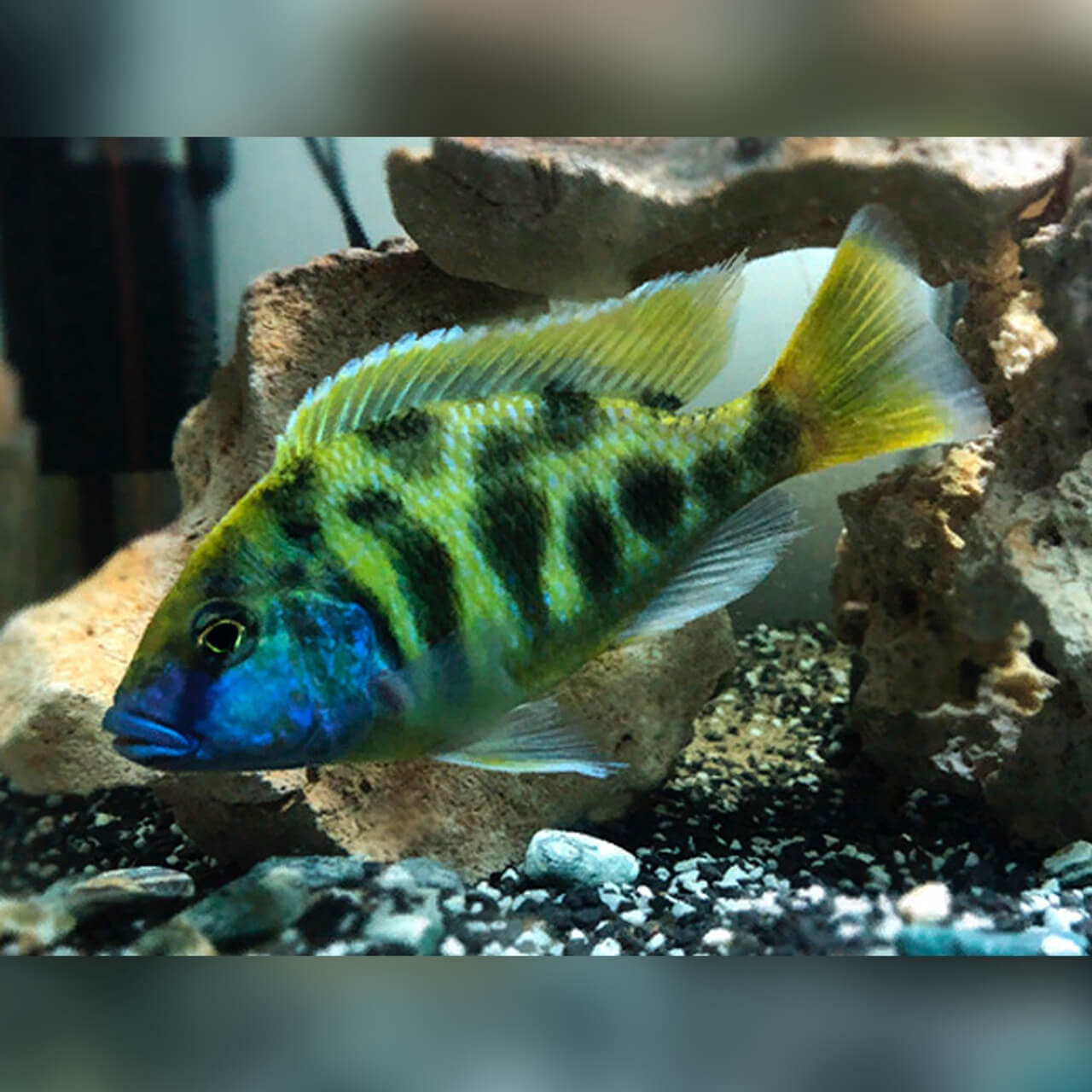
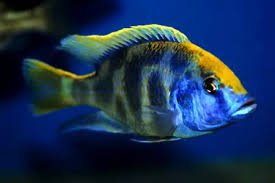
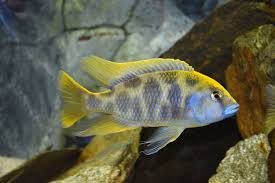
Native to Lake Malawi in Africa, the Venustus Cichlid (Nimbochromis venustus) grows up to 10–12 inches, featuring a sleek golden-olive body with iridescent blue on the face and fins. Males display more vivid colors during breeding, making them a standout in any display tank. Females are slightly smaller and duller, but both bring lively hunting behaviors like ambushing prey.
Tank Setup for Beginners
Provide at least 125 gallons for adults to allow swimming space, as these active fish dig and rearrange substrate. Use fine sand to mimic their natural habitat—avoid gravel to prevent injury during burrowing. Add flat rocks or caves at the back for shelter, but anchor any silk plants securely, as live plants will be uprooted. Strong canister filtration and moderate lighting maintain crystal-clear water essential for eye health.
A well-set-up tank with sand substrate and rock structures mirrors the Venustus’s Lake Malawi roots, ideal for new aquarists setting up their first cichlid aquarium.
Water and Maintenance
Keep water at 73–82°F (23–28°C) with pH 7.7–8.6 and good flow to replicate Malawi’s alkaline rift lake conditions. Crushed coral in the filter buffers pH naturally. Perform 20–25% weekly water changes to control ammonia, as high pH makes it toxic—test parameters regularly with beginner kits.
Diet and Feeding
As carnivores, feed high-protein pellets, frozen brine shrimp, or bloodworms 2–3 times daily in small amounts to avoid waste. Juveniles accept flakes, but adults prefer meaty foods mimicking their ambush hunting style. Avoid overfeeding to prevent Malawi bloat.
Compatibility and Temperament
Semi-aggressive, Venustus suits larger tanks with robust tank mates like Frontosa, Livingstonii, or other peacock cichlids (6+ of same size). Avoid small fish or delicate species—they’ll be eaten or stressed. Keep as singles or pairs in species tanks for harmony.
Breeding Tips
Mouthbrooders; females hold 10–20 eggs for 3 weeks. Trigger spawning with stable parameters and live foods. Beginners can succeed with slate spawning sites and separate breeding tanks.
Reviews
There are no reviews yet.