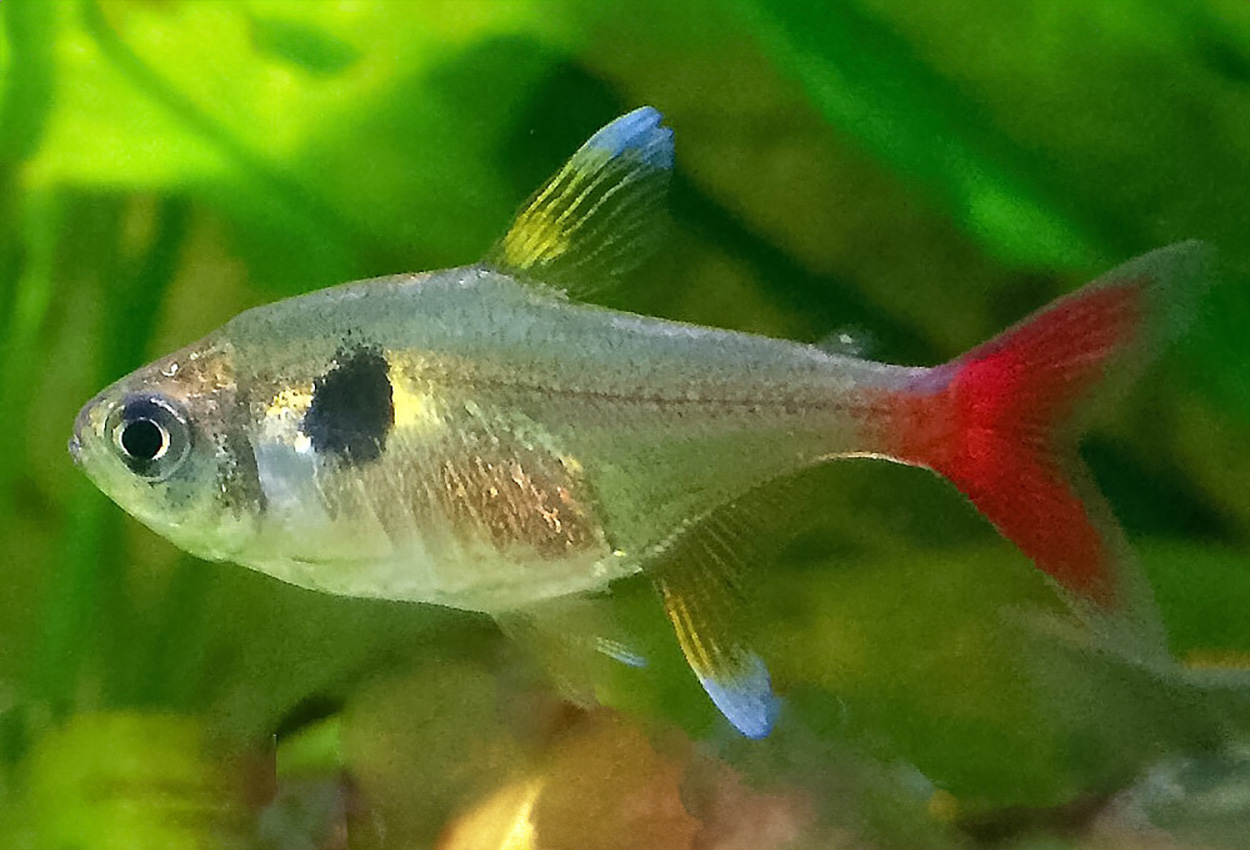
Meet the Yellow Phantom Tetra
Hailing from the slow-moving, shaded forest streams of South America (specifically Suriname and French Guiana), the Yellow Phantom Tetra (Hyphessobrycon roseus) brings subtle elegance to the home aquarium. Unlike brighter, flashier tetras, the Yellow Phantom features a sophisticated palette of warm amber, soft peach, and translucent rose gold. When settled into a mature aquarium with dark substrate or live plants, their colors deepen dramatically, flashing beautiful golden tints as they school together.
Males display tall, elegant fins and will occasionally engage in harmless, mesmerizing “fin-flaring” dances with one another to impress females. They remain compact, rarely exceeding 1.2 inches (3 cm) in length, making them perfect candidates for nano setups and beautifully scaled aquascapes.
Setting Up Your Tank: The Beginner’s Blueprint
1. Tank Size and Swimming Space
While these fish are small, they are active swimmers that love to zip back and forth in a tight group. A 15-gallon long or 20-gallon aquarium is the perfect starting point. Avoid tall, narrow columns; horizontal space is what matters most to these schooling fish.
2. Plants and Decor
In the wild, these tetras live surrounded by fallen leaves, driftwood, and overhanging jungle canopy. To make them feel secure at home:
-
Live Plants: Incorporate plenty of live greenery like Java Fern, Anubias, or Amazon Swords.
-
Floating Cover: Adding floating plants (like Frogbit or Salvinia) creates shaded areas. Under subdued or dappled lighting, the fish will lose their shyness and display much richer colors.
-
Substrate: A dark gravel or sand substrate helps their pale peach and golden bodies pop visually.
Perfect Community Tankmates
The Yellow Phantom Tetra is incredibly gentle and lacks the fin-nipping tendencies found in some of its larger cousins. They are ideal candidates for a peaceful community tank.
-
Great Companions: Other small tetras (like Neon or Ember Tetras), Rasboras, Corydoras Catfish, Khuli Loaches, Honey Gouramis, and peaceful Dwarf Cichlids.
-
Invertebrates: They coexist perfectly with adult dwarf shrimp (like Cherry Shrimp) and ornamental snails, though they may snack on microscopic shrimp babies.
-
Who to Avoid: Avoid large, aggressive, or predatory species (like Angels or Oscars) that could easily mistake your small tetras for a snack.
Feeding and Nutrition Made Simple
You do not need an expert routine to keep these fish thriving. As omnivores, they are eager eaters and will readily accept almost anything small enough to fit in their mouths. For optimal health and color, we recommend a varied diet:
-
Daily Staple: High-quality micro-pellets or crushed tropical flakes.
-
Weekly Treats: Frozen or freeze-dried Daphnia, Cyclops, baby brine shrimp, or mini bloodworms.
Beginner Tip: Because these fish have tiny mouths, ensure your flake food is crushed into fine pieces. Feed only what they can entirely consume within two minutes, once or twice a day.
Acclimation & Care Tips
When your new fish arrive, take your time introducing them to their new home. Use the float-and-drip acclimation method over 30 to 45 minutes to let them adjust to your water temperature and pH smoothly. Keep the aquarium lights off during this time and for the rest of the day to minimize their stress. Once settled, they are robust, disease-resistant little fish that will bring you joy for 3 to 5 years!
Reviews
There are no reviews yet.