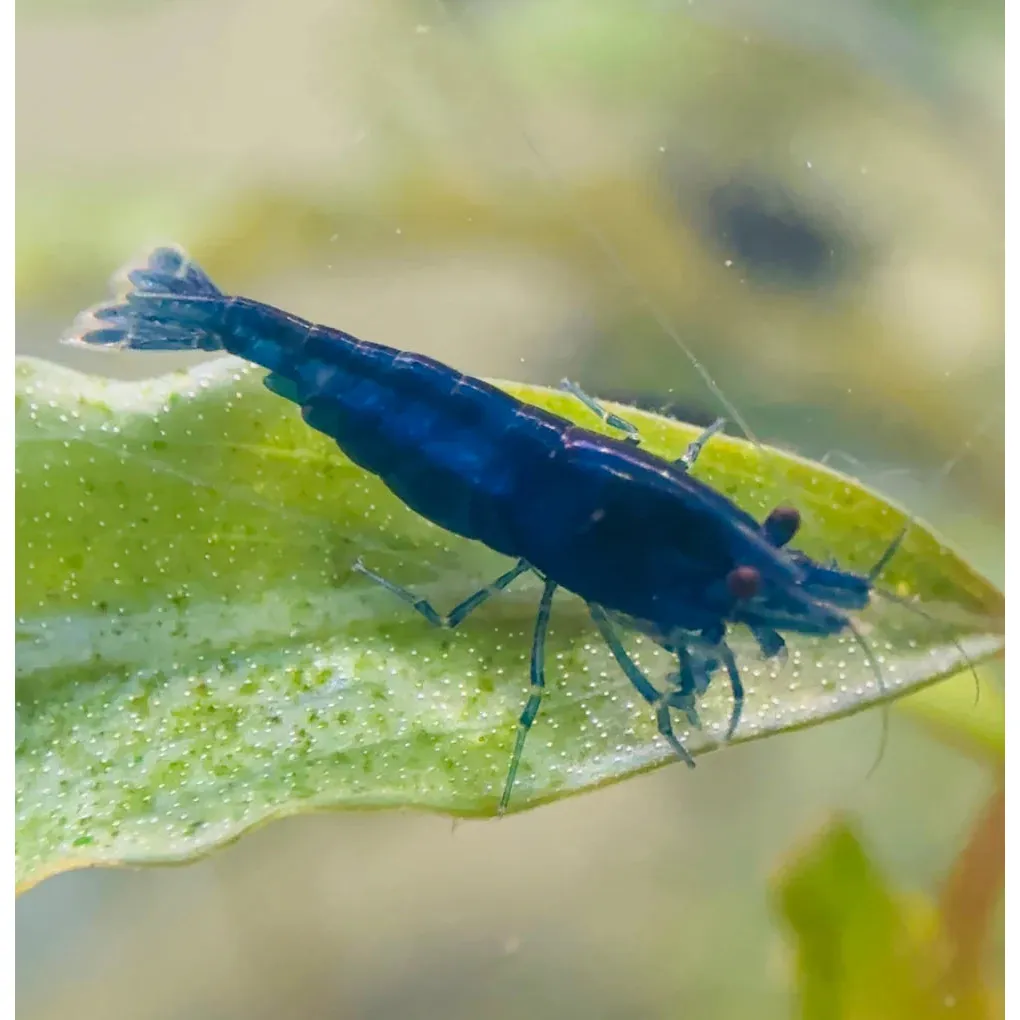
The Blue Cherry Shrimp is a captive-bred color variant of the incredibly resilient Neocaridina genus. Featuring a captivating, deep blue coloration, these shrimp stand out beautifully against green live plants, dark substrates, and natural driftwood. They are highly active invertebrates, continuously foraging throughout the aquarium, adding dynamic movement and a vibrant pop of color to any nano tank or community setup.
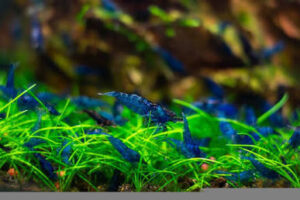
Blue dwarf shrimp in a planted aquascape.
Why They are Perfect for Beginners
If you are new to keeping aquatic invertebrates, Neocaridina shrimp are the ideal starting point. Unlike more sensitive species (such as Caridina/Crystal shrimp), Blue Cherry Shrimp are forgiving of minor fluctuations in water quality. They adapt readily to most tap water conditions, provided the water is properly dechlorinated and fully cycled before their arrival.
Dietary Habits & Ecosystem Benefits
Blue Cherry Shrimp are diligent scavengers. Their primary diet consists of natural biofilm and microscopic algae that form on surfaces inside the tank. To ensure optimal health, color vibrancy, and successful molting (shedding their exoskeleton to grow), we recommend supplementing their diet with:
-
High-quality shrimp pellets or wafers
-
Blanched vegetables (such as zucchini, spinach, or carrots)
-
Powdered foods to ensure newborn shrimplets receive proper nutrition
Ideal Tankmates
Because of their small adult size, safety is paramount. Blue Cherry Shrimp should only be housed with entirely peaceful, non-aggressive tankmates.
-
Excellent Tankmates: Snails (Nerite, Mystery), small nano fish (Neon Tetras, Chili Rasboras, Otocinclus Catfish), and other peaceful dwarf shrimp.
-
Avoid: Large or aggressive fish such as Cichlids, Angels, Goldfish, and aggressive Barbs, which will view your shrimp as a food source.
Acclimation Guide for Beginners
Critical Safety Note: Invertebrates are highly sensitive to sudden changes in water chemistry and temperature. Always use the drip acclimation method for at least 1 to 2 hours before releasing your new shrimp into their permanent home. Never expose shrimp to copper-based medications or fertilizers, as copper is highly toxic to invertebrates.

Reviews
There are no reviews yet.