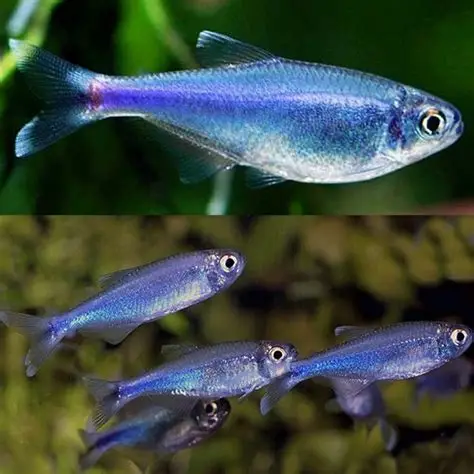
The Boehlkea fredcochui, widely known as the Blue Tetra, originates from the Amazon River basin. Unlike many standard grey or silver tetras, this species boasts a distinct, luminous blue hue that intensifies under proper aquarium lighting and a dark gravel substrate. Growing to a maximum size of about 2 inches (5 cm), they offer the perfect balance of small size and high visual impact for beginner and intermediate hobbyists alike.
Aquascaping & Tank Setup
To see your Blue Tetras thrive, structure your tank to mimic their natural river environment:
-
Open Swimming Space: These fish are incredibly fast, active swimmers. Ensure the central area of the tank is left unobstructed.
-
Plant Layout: Line the back and sides of your aquarium with live or silk plants (such as Amazon Swords or Java Fern). This provides security zones where they can rest or retreat if stressed.
-
Substrate & Decor: Using a dark substrate and adding pieces of driftwood will not only make the fish feel secure but will also make their brilliant blue coloration pop visually.
Behavior and Ideal Tank Mates
While generally peaceful, Blue Tetras are exceptionally high-energy. If kept isolated or in pairs, they can become bored and exhibit minor fin-nipping tendencies toward slower neighbors.
Beginner Success Tip: Always purchase Blue Tetras in groups of at least 6 to 8 individuals. In larger groups, they establish a natural pecking order within their own school, focusing their playful energy inward rather than bothering other fish.
Excellent Tank Mates Include:
-
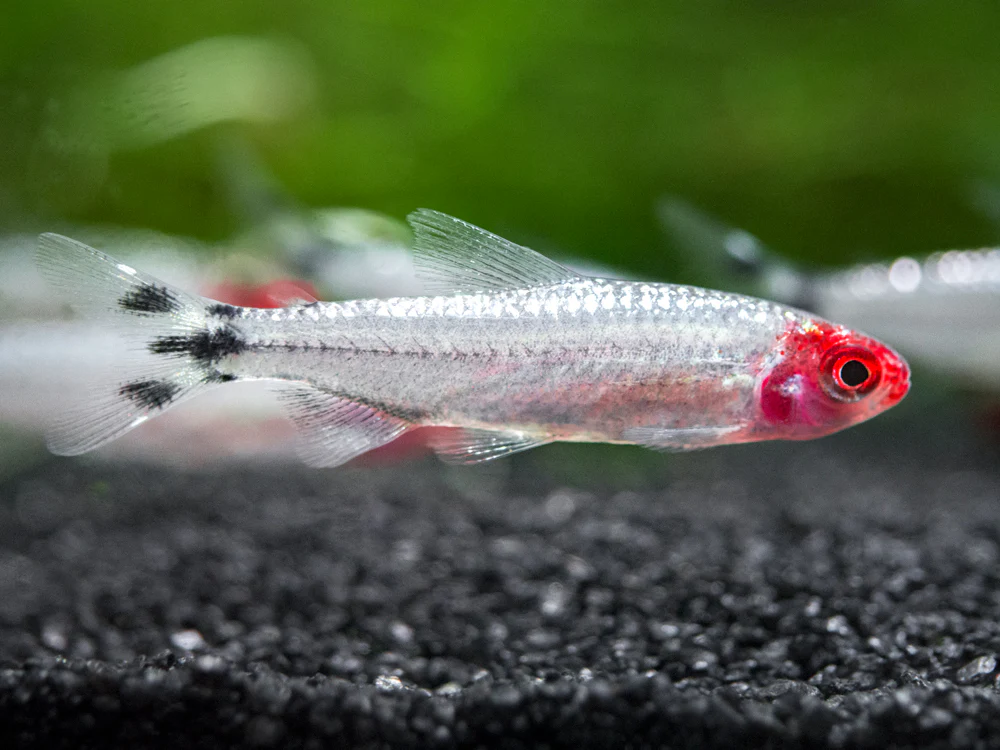
Other fast-moving tetras (like Buenos Aires or Rummy-nose Tetras)
-
Active danios and rasboras
-
Corydoras catfish (peaceful bottom-dwellers that stay out of the mid-water swimming lanes)
-
Bristlenose Plecos
Avoid housing them with slow-moving, long-finned fish like Fancy Guppies, Angelfish, or Betta fish.
Simple Feeding Routine
Feeding your Blue Tetras is straightforward, making them excellent for beginners. They are enthusiastic eaters that primarily feed at the top and middle of the water column. Provide a varied diet consisting of:
-
High-Quality Flakes or Micro-Pellets: Form the nutritional baseline for everyday health and color retention.
-
Occasional Treats: Supplement 2–3 times a week with frozen or freeze-dried foods like brine shrimp or bloodworms to promote optimal vitality.
Reviews
There are no reviews yet.