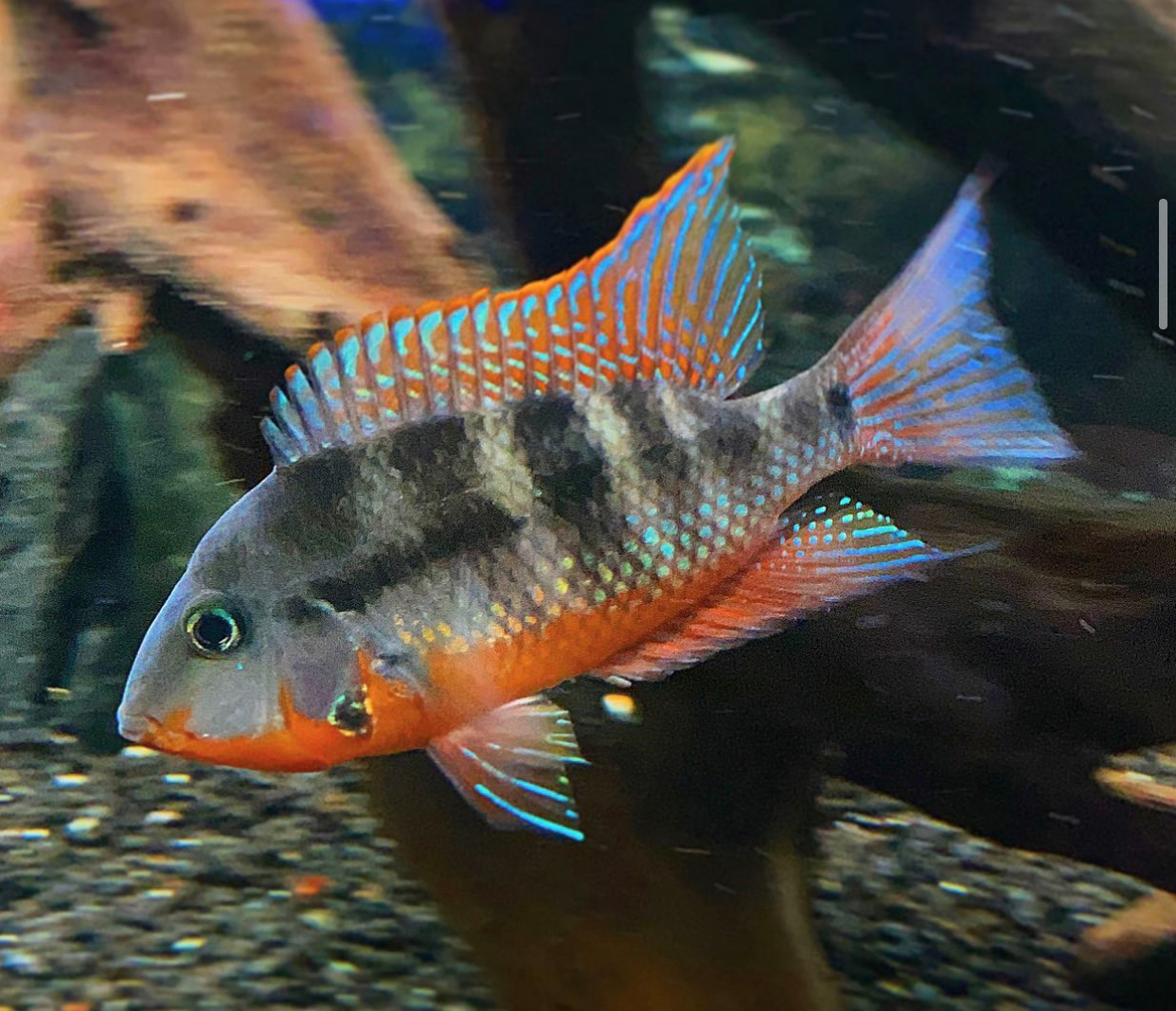
Native to the slow-moving rivers, streams, and limestone sinkholes of Central America—specifically Mexico, Belize, and Guatemala—the Firemouth Cichlid is a highly adaptable species. In the wild, they are accustomed to clear to turbid waters with sandy or muddy bottoms. Their natural resilience is exactly what makes them incredibly forgiving to the minor water parameter fluctuations that beginner aquarists occasionally encounter.
Visual Appeal & Fascinating Behavior
The defining feature of Thorichthys meeki is its remarkable coloration. While they sport a sleek silver-grey body adorned with iridescent blue scales (often called “spangles”) and a prominent dark spot on their gill covers, their lower jaw and chest are a brilliant crimson red.
For beginners, watching a Firemouth interact with its environment is endlessly entertaining. When defending its territory or courting a mate, it will puff out its gill covers and lower its throat membrane, expanding the bright red area to look intimidating to rivals. Despite this theatrical display, they are largely “all bark and no bite” compared to tougher cichlid species.
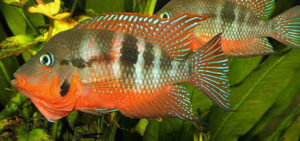
Firemouth Cichlid (Thorichthys meeki)
Setting Up Your Firemouth Aquarium
To keep your Firemouth healthy and stress-free, try to replicate their natural environment using these simple beginner-friendly guidelines:
-
Substrate Choice: Firemouths love to sift through the bottom of the tank looking for food. We strongly recommend using fine aquarium sand or very smooth, small gravel. Sharp gravel can scratch their delicate mouths.
-
Hiding Places & Caves: Use terracotta pots, smooth river rocks, and driftwood to create distinct territories. Providing clear boundaries helps reduce any potential territorial aggression.
-
Live Plants: While they may occasionally dig near the base of plants, hardier species like Anubias or Java Fern can be attached directly to rocks or driftwood, keeping them safe from excavation.
Diet and Nutrition
Feeding your Firemouth Cichlid is incredibly straightforward, as they are non-picky omnivores. To bring out their most vibrant red coloration and maintain a strong immune system, offer a varied diet consisting of:
-
High-Quality Staples: Cichlid pellets or flakes formulated with natural color-enhancers (like spirulina or astaxanthin).
-
Protein Treats: Frozen or live brine shrimp, bloodworms, and Mysis shrimp fed 2–3 times a week.
Ideal Tank Mates
While they can be kept in a single-species setup, Firemouths do wonderfully in a community tank if given enough space. Avoid housing them with overly aggressive cichlids (like Jack Dempseys or Convicts) or fish small enough to fit into their mouths (like tiny neon tetras).
Great Beginner Tank Mates include: Larger tetras (such as Buenos Aires or Congo Tetras), Swordtails, Platies, peaceful catfish like Bristlenose Plecos, and active schooling fish like Giant Danios.
Reviews
There are no reviews yet.