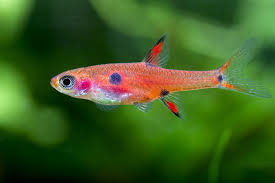
Native to the slow-moving blackwater streams and peat swamps of Southeast Asia, Boraras maculatus thrives in environments packed with live plants, driftwood, and leaf litter. In the home aquarium, mimicking these conditions makes them feel secure, resulting in deeper, more radiant red coloration.
Why They are Perfect for Beginner Aquarists
Don’t let their tiny size fool you; Dwarf Rasboras are remarkably resilient when introduced to a well-cycled, mature aquarium.
-
-
Low Bio-Load: Because they are so small, a school of these fish generates very little waste, making water quality easier to manage for beginners.
-
Community Friendly: They are completely peaceful. They lack the size or desire to bother tankmates, making them the ultimate neighbors for decorative dwarf shrimp (like Cherry Shrimp) and small snails.
-
Simple Diet: They are not picky eaters. They will readily eat standard aquarium fare, provided it is small enough to fit into their tiny mouths.
-

A schooling group displays their natural behavior and brighter colors.
Creating the Perfect Aquarium Environment
To see your Dwarf Rasboras truly thrive, consider the following simple setup tips:
1. Aquascaping & Plants
These fish love cover. Adding live plants like Java Fern, Anubias, or floating salvinia creates shaded areas that reduce their stress. A dark substrate or gravel background will also contrast beautifully with their bright red bodies, making them pop visually.
2. Filtration Warning
Because Boraras maculatus is a micro-fish, standard power filters can create currents that are too strong for them, or worse, suck them up. We highly recommend using a simple sponge filter or placing a pre-filter sponge over your filter intake to keep them safe.
3. Schooling Behavior
In the wild, these fish survive by sticking together. If kept alone or in pairs, they will become timid, hide constantly, and lose their color. Keeping them in a group of 6 (or ideally 10+) builds their confidence, encouraging them to swim freely in the middle layers of your aquarium.
Reviews
There are no reviews yet.