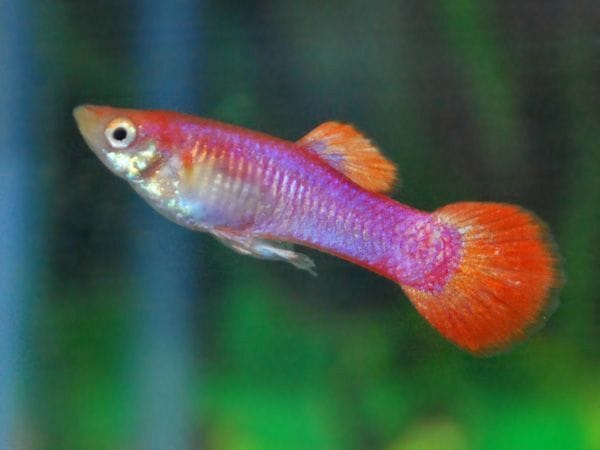
For those entering the freshwater aquarium hobby, male guppies offer an unbeatable balance of beauty and forgiveness. Unlike many sensitive tropical species, guppies adapt well to standard tap water conditions (once properly conditioned) and thrive in established community aquariums.
Visual Identification & Male Characteristics
Male guppies are easily distinguished from females by their intensely vibrant coloration, elaborate finnage, and slender bodies. Males also feature a modified anal fin called a gonopodium, which is used during breeding. Because male guppies do not become egg-heavy like females, their colors remain vivid and consistent year-round.
Water Quality & Tank Setup Tips
-
Filtration & Flow: Guppies have delicate, flowing fins. Ensure your filter flow is gentle to moderate so they do not struggle against strong currents. Sponge filters or baffled internal power filters work exceptionally well.
-
Aquascape: Incorporating live aquatic plants like Java Fern, Anubias, or Guppy Grass gives your fish plenty of places to explore while reducing overall nitrate levels in the water.
-
Social Ratios: If housing with female guppies, maintain a ratio of 1 male to every 2 or 3 females. This spreads out the male’s active courtship behavior and prevents individual females from becoming stressed. Alternatively, keep an all-male group for a colorful, fry-free display.
Acclimatization Best Practices
When bringing your new Pink Guppy Male home, perform a drip acclimatization over 30 to 45 minutes. Float the sealed transport bag in your tank to equalize temperature, then slowly introduce tank water to the bag in small increments. This helps prevent parameter shock and ensures a smooth transition to his new environment.
Reviews
There are no reviews yet.