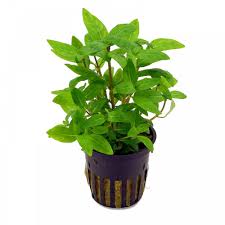
Introduction to Staurogyne repens
Staurogyne repens is a compact, robust, and highly adaptable foreground plant that brings a natural, architectural structure to any freshwater aquarium. Unlike traditional carpeting plants that spread strictly via thin runners, Staurogyne repens is a true creeping stem plant. It develops a dense, bushy habit with small, compact, spatulate green leaves that instantly give your tank a mature, professional look.
Why It’s Perfect for Beginner Aquarists
If you have ever struggled with finicky carpeting plants like Dwarf Hairgrass or Hemianthus callitrichoides (‘HC’ Cuba), Staurogyne repens is the perfect alternative. It is highly resilient and handles pruning exceptionally well. While it genuinely appreciates nutrient-rich substrates and carbon dioxide ($CO_2$) injection, it can successfully adapt to low-tech, non-$CO_2$ tanks—it will simply grow at a slower, more deliberate pace.
Planting & Aquascaping Techniques
When your plant arrives, prepare it by cutting the stems into smaller individual portions. Using a pair of fine aquascaping tweezers, gently push each stem into a nutrient-rich soil or fine gravel substrate, leaving about 1–2 inches of space between them.
-
The Carpet Effect: As the stems grow upward, pinch off the tallest shoots. This encourages the plant to branch out horizontally, sending out lateral shoots that quickly form a thick, interconnected carpet.
-
Hardscape Integration: Plant them directly into the crevices where rocks and driftwood meet the substrate to soften harsh lines and create a seamless, natural transition.
Maintenance, Trimming, and Propagation
Propagation is incredibly simple and highly rewarding. When the bush becomes too dense or tall, use sharp aquascaping shears to trim the tops.
Pro Tip: Never throw away your trimmings! The cut tops can be replanted directly back into the substrate, where they will quickly grow new root systems and form entirely new plants.
To keep its vibrant green hue and prevent the lower leaves from yellowing or falling off, ensure the plant receives adequate light at the substrate level and a steady supply of iron and micronutrients via root tabs or liquid fertilizers.
Reviews
There are no reviews yet.